Digital Apollo by David A. Mindell
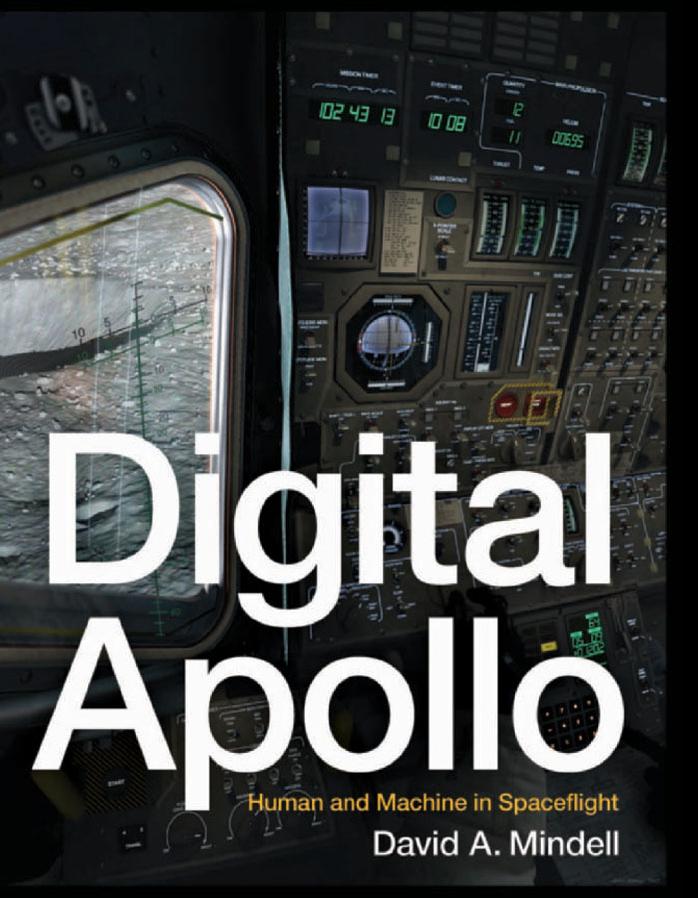
Author:David A. Mindell [Mindell, David A.]
Language: eng
Format: epub, pdf
ISBN: 9780262266680
Publisher: MIT Press
Published: 2008-07-15T05:00:00+00:00
Recovering from the Fire
The tragedy of the Apollo 1 fire stemmed from a series of failures in the program, from quality control to configuration management, and from NASAâs relationships with its contractors. It brought congressional hearings and a traumatic reevaluation across the Apollo program. The high-profile crisis it provoked concerning the larger Apollo spacecraft meant the software problems could be worked out below the glare of publicity. In the fallout, Joe Shea was forced out, and Chris Kraft rose to renewed prominence; his operations-oriented approach would dominate the remainder of the program. The balance of power shifted noticeably toward NASA Mission Control, toward Houston, toward the astronauts, and away from ballistic missile-style systems engineering.
None of this was lost on Bill Tindall. Barely two months after the fire, he was already acknowledging, ââIt is possible to take advantage of the stretch out of the Apollo flight schedule in the manner in which we develop the spacecraft computer programs at MIT.ââ For Martin, ââit was a pretty tense time,ââ and he acknowledged that ââwe were not building that program in a way that was disciplined, and organized, and had traceability in it.ââ81 Battin, too, realized that he was too technical, too interested in the guidance itself to be the right kind of manager. ââHe [Tindall] really did apply good discipline to our shop, and we did learn how to get people. It was ...a management technique which I, frankly, was not equipped to handleâ¦. I wasnât really up to trying to direct the whole orchestra when I wanted to concentrate on a piece of it.ââ82
Copps remembered the turning point. ââOne day Tindall just gave us hell. ...He really beat us up. âHow can you possibly do this? Here you sit at the very center of the success or failure of this extremely important program. Youâre behind. Get it through your head you are fucking this up.âââ By this time, however, the MIT group respected Tindall enough that they could hear his message.83
By March 1967, Tindall was calm for the first time, his remarks conveying a dramatic difference in tone. ââIt is my feeling that no major problem exists any longer in this area. MIT has an organization and facilities geared up to handle the workload in an orderly, professional, unharried manner.ââ84 It was just two months after the fire, but already things were looking up. The number of separate versions of the software was reduced. In principle, only two were neededâone for the CSM and one for the LM. But several others had been planned for earth-orbital flights, and several others when the intended programs were not ready. The flight schedule had slipped sufficiently that software was no longer the pacing item, nor was crew training, nor testing. Furthermore, the value of quality had pervaded the organization. Techniques like ââcode inspection,ââ a fancy name for a human being closely reading a printout of code, had proven effective in finding bugs. Still, Apollo software never flew completely bug-free; known problems remained in the code, which hopefully remained free of unknown errors.
Download
This site does not store any files on its server. We only index and link to content provided by other sites. Please contact the content providers to delete copyright contents if any and email us, we'll remove relevant links or contents immediately.
Whiskies Galore by Ian Buxton(42156)
Introduction to Aircraft Design (Cambridge Aerospace Series) by John P. Fielding(33245)
Rewire Your Anxious Brain by Catherine M. Pittman(18797)
Craft Beer for the Homebrewer by Michael Agnew(18343)
Cat's cradle by Kurt Vonnegut(15554)
Sapiens: A Brief History of Humankind by Yuval Noah Harari(14552)
Leonardo da Vinci by Walter Isaacson(13507)
The Tidewater Tales by John Barth(12754)
Thinking, Fast and Slow by Kahneman Daniel(12526)
Underground: A Human History of the Worlds Beneath Our Feet by Will Hunt(12229)
The Radium Girls by Kate Moore(12180)
The Art of Thinking Clearly by Rolf Dobelli(10719)
Mindhunter: Inside the FBI's Elite Serial Crime Unit by John E. Douglas & Mark Olshaker(9518)
A Journey Through Charms and Defence Against the Dark Arts (Harry Potter: A Journey Throughâ¦) by Pottermore Publishing(9335)
Tools of Titans by Timothy Ferriss(8593)
Wonder by R. J. Palacio(8240)
Turbulence by E. J. Noyes(8208)
Change Your Questions, Change Your Life by Marilee Adams(7931)
Nudge - Improving Decisions about Health, Wealth, and Happiness by Thaler Sunstein(7852)
